Wisdom Teeth Pain? What’s Normal, What’s Not & When to Remove Them
If you’re in your late teens or twenties and suddenly noticing a dull ache at the back of your mouth – or your jaw feels stiff for no obvious reason – your wisdom teeth might be making their debut. They’re the last teeth to arrive, and they don’t always do it quietly.
For some people, wisdom teeth come through perfectly fine and never cause a moment of trouble. For others, they become a recurring source of pain, infection, and frustration. The tricky part is figuring out which category you fall into – and when “wait and see” has turned into “this needs to come out.”
Dr. Peter Wong and our team have been helping Spring Hill locals navigate wisdom teeth decisions for over 20 years. In this guide, we’ll walk you through what’s happening, what’s normal, what’s not, and what your options actually are.
What Are Wisdom Teeth (And Why Do They Cause So Much Grief)?
Wisdom teeth – officially called third molars – are the very last set of molars at the back of your mouth. Most people have four (two up top, two down bottom), though some people have fewer, and a small percentage of lucky folks never develop them at all.
They typically start making an appearance between ages 17 and 25, which is why they’re associated with the transition into adulthood. The name “wisdom teeth” comes from the idea that they arrive at an age when you’re supposedly wiser. The irony being, of course, that they cause some of the least-wise decisions you’ll ever make (like trying to tough it out for three weeks with an infected gum flap because “it’ll probably sort itself out”).
The reason they cause so much trouble comes down to simple real estate. By the time wisdom teeth arrive, your other 28 teeth have already claimed their space. There’s often simply not enough room left at the back of the jaw for four more molars to come through properly. When there isn’t enough space, the teeth become impacted – meaning they’re stuck, angled, or unable to fully emerge.
Types of Impaction: Why Your Wisdom Teeth Might Be Stuck
Not all impacted wisdom teeth are the same, and the type of impaction plays a big role in whether they’ll cause problems and how they’d need to be removed.
Fully erupted: The tooth has come through the gum completely and is in a normal position. These often function just like any other molar and may never need removal.
Partially erupted: The tooth has broken through the gum but only partially. This is one of the most problematic scenarios because the gum flap covering the partially emerged tooth traps food and bacteria, leading to recurrent infections (a condition called pericoronitis).
Mesial impaction: The tooth is angled forward, towards the front of the mouth. This is the most common type of impaction. Many mesial impactions eventually erupt on their own, though some remain stuck and put pressure on the molar in front of them.
Horizontal impaction: The tooth is lying completely on its side, pushing sideways into the root of the adjacent molar. This is the most difficult type to remove and the most likely to cause damage to neighbouring teeth if left alone.
Distal impaction: The tooth is angled backward, towards the back of the mouth. These are less common and may or may not require removal depending on whether they’re causing issues.
The Warning Signs: When Wisdom Teeth Are Telling You Something's Wrong
Not every bit of discomfort means your wisdom teeth need to come out. But there are clear signs that indicate you should get them checked. Here’s what to look out for:
Signs You Should Book an Appointment
- Pain or tenderness at the back of the mouth, either constant or triggered by chewing
- Swollen or red gums behind your last molar
- Jaw stiffness or difficulty opening your mouth fully
- A bad taste or persistent bad breath that doesn’t go away with brushing (a sign of trapped food and bacteria)
- Pressure or aching in the adjacent teeth
- Swelling in the cheek or jaw area
- Difficulty or pain when swallowing (this can indicate a spreading infection and needs urgent attention)

The Pericoronitis Pattern
One of the most common wisdom tooth complaints we see is pericoronitis – inflammation of the gum flap over a partially erupted wisdom tooth. It tends to follow a frustrating pattern:
- The area gets sore and irritated
- It flares up with swelling and pain for a few days
- It settles down on its own (or with antibiotics)
- A few weeks or months later, it comes back
Many patients live with this cycle for years, thinking each flare-up is a one-off. But each episode can be worse than the last, and recurring infections aren’t something you should just put up with. If this sounds familiar, it’s worth getting an X-ray to see what’s actually going on under the gumline.
Do All Wisdom Teeth Need to Come Out?
This is one of the most common questions we get, and the honest answer is: no, not always.
If your wisdom teeth are:
- Fully erupted and in a good position
- Easy to reach with your toothbrush (so you can keep them clean)
- Not causing pain, infection, or damage to adjacent teeth
- Not contributing to crowding of your other teeth
…then there may be no reason to remove them. Dr. Wong’s approach has always been “chat first, drill later” – if your wisdom teeth are healthy and not causing issues, he’ll tell you that straight. We won’t recommend extraction just because it’s possible.
However, if your wisdom teeth are causing recurrent pain, trapping bacteria that lead to gum infections, or putting pressure on the teeth next to them, removal is often the most predictable long-term solution.
What Happens If You Leave Problem Wisdom Teeth Alone?
Ignoring problem wisdom teeth isn’t just about putting up with occasional discomfort. Leaving them can lead to:
- Damage to the adjacent molar: An impacted wisdom tooth pushing against the tooth in front can cause resorption (erosion) of that tooth’s root, potentially leading to loss of both teeth.
- Repeated infections: Each pericoronitis flare-up can become more severe, and spreading infections in the jaw are serious.
- Cysts: Rarely, the sac surrounding an impacted tooth can fill with fluid and form a cyst, which can damage the jawbone and surrounding teeth.
- Crowding: Pressure from erupting wisdom teeth can contribute to shifting of your other teeth over time – particularly noticeable if you’ve had braces in the past.
How We Assess Your Wisdom Teeth at Spring Hill Dental
The first step is always a proper assessment – we don’t guess, and we don’t rush. Here’s what to expect when you come in:
1. Examination and X-rays
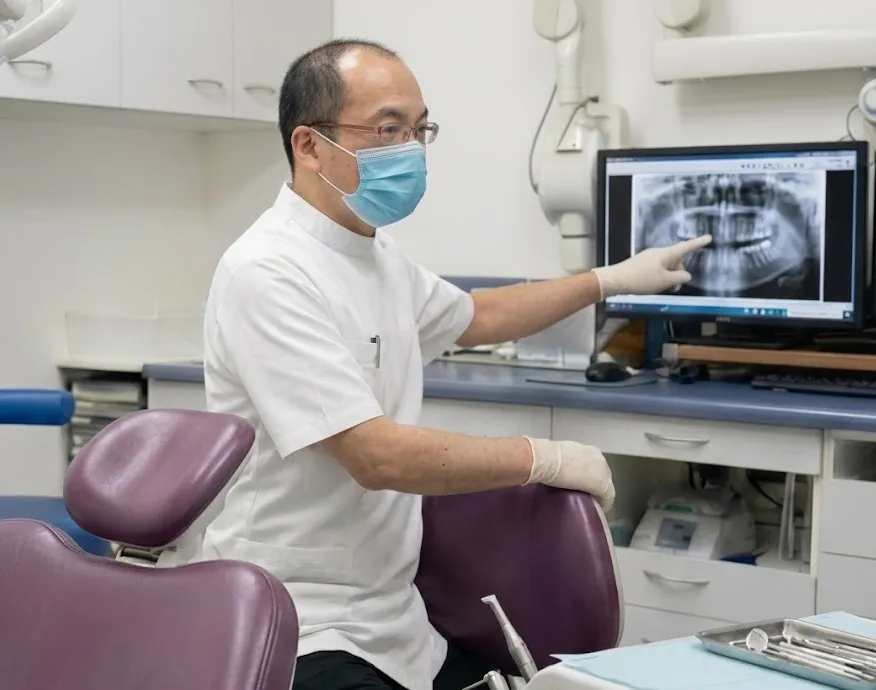
Dr. Wong will examine the area, check your gum health, and take a panoramic X-ray (OPG) if needed. This shows the full picture – the position of your wisdom teeth, their angle, how close they sit to important nerves, and whether there’s any damage to adjacent teeth.
2. Honest assessment
We’ll sit down with you and explain exactly what we see – in plain English, not jargon. You’ll see your X-ray, understand what’s happening, and know your options. If extraction isn’t necessary, we’ll tell you. If it is, we’ll explain why.
3. Written quote
Before any treatment, you’ll receive a written quote so you know exactly what it will cost. No surprises, no hidden fees. We process all major health funds on the spot via HICAPS, so you’ll know your out-of-pocket cost upfront.
4. Referral if needed
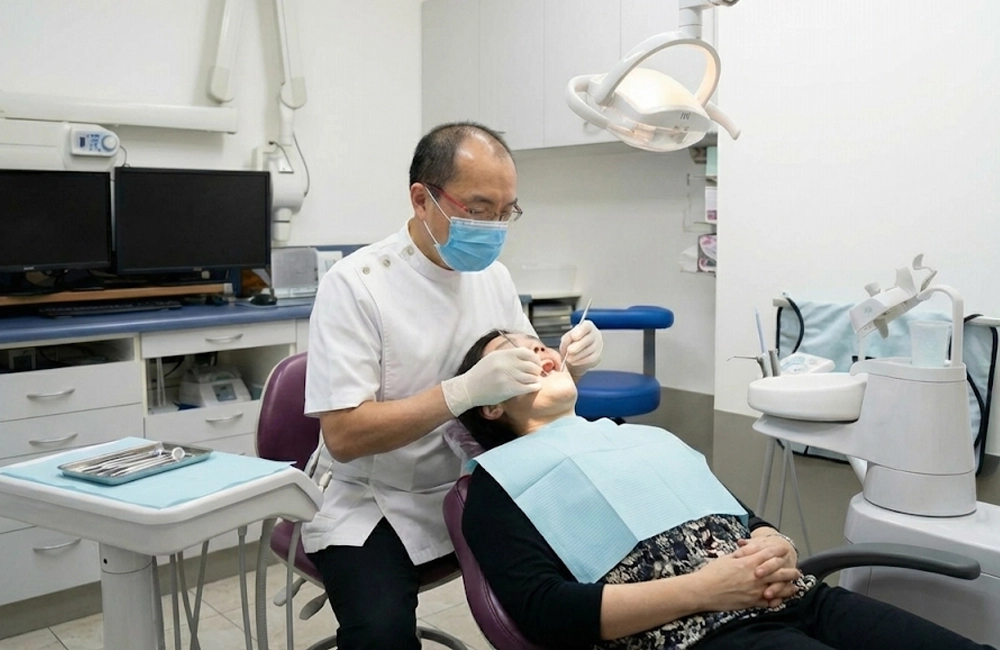
Straightforward wisdom tooth extractions can often be done here at our Spring Hill practice. For more complex cases – such as deeply impacted teeth or those close to the inferior alveolar nerve – Dr. Wong may refer you to a trusted oral and maxillofacial surgeon. We only refer to specialists we’d send our own family to.
What Recovery Actually Looks Like
We’re not going to sugarcoat it having a wisdom tooth removed is a procedure, and there’s a recovery period. But knowing what to expect makes a big difference, and most of our patients are surprised by how manageable it is.
The First 24–48 Hours
This is when you’ll experience the most swelling and discomfort. Plan to rest. You’ll want to:
- Stick to soft foods: Think soups, smoothies, yoghurt, mashed potato, scrambled eggs. Avoid anything hot, spicy, or with small bits (like rice or seeds) that can get into the extraction site.
- Use ice packs: 20 minutes on, 20 minutes off, for the first day to manage swelling.
- Avoid vigorous rinsing, spitting, or using a straw: These can dislodge the blood clot that’s forming in the socket, leading to a painful condition called dry socket.
- Take pain relief as directed
Days 3–7
Swelling typically peaks around day two or three and then starts to subside. You’ll gradually transition back to normal foods as comfort allows. Gentle salt-water rinses (after the first 48 hours) help keep the area clean.
Beyond the First Week
Most people are back to normal within a week to ten days. Full healing of the socket takes several weeks, but you won’t notice it. We’ll schedule a quick follow-up to make sure everything’s healing properly.
A Note on Dry Socket
You might have heard of dry socket – it’s when the blood clot protecting the extraction site comes loose, exposing the bone underneath. It’s painful, but it’s also uncommon and largely preventable if you follow the aftercare instructions. If you’ve had a wisdom tooth out and the pain starts getting worse rather than better after the first few days (rather than gradually improving), give us a call.
Quick FAQ: Wisdom Teeth
Q: At what age do wisdom teeth come through?
Most commonly between 17 and 25, though it varies. Some people don’t get them until their late twenties. If you’re outside this range and having symptoms, it’s worth getting checked – occasionally wisdom teeth can cause issues much later in life.
Q: Can I just wait and see if the pain goes away?
A single episode of mild discomfort might settle on its own. But if you’re getting recurrent pain, swelling, or a bad taste, the issue won’t resolve without treatment. Each flare-up can be worse than the last. It’s better to get an X-ray and understand what’s happening before it becomes an emergency.
Q: How much does wisdom tooth removal cost?
The cost varies depending on the complexity of the case and whether you’re having one tooth or all four removed. We provide a written quote before any treatment so there are no surprises. If you have private health insurance with extras cover, your fund may cover a significant portion – we process claims on the spot via HICAPS.
Q: Is wisdom tooth removal painful?
The procedure itself is done under local anaesthetic, so you won’t feel pain during the extraction – you’ll feel pressure and movement, but not sharp pain. For nervous patients, we take extra time to make sure you’re comfortable and numbed properly before we begin. Aftercare pain is typically well-managed with over-the-counter pain relief.
Q: Does everyone need their wisdom teeth out?
No. If your wisdom teeth are fully erupted, positioned correctly, cleanable, and not causing any issues, they can stay. We assess each case individually – and if yours are fine, we’ll tell you they’re fine.
Worried About Your Wisdom Teeth? Let’s Take a Look.
If you’ve been putting up with pain at the back of your mouth, or you just want to know whether your wisdom teeth are going to be a problem down the track, the best thing you can do is get a proper assessment. Dr. Wong will take the time to look at what’s going on, show you your X-rays, and give you an honest recommendation – even if that recommendation is “they’re fine for now.”
You can reach our Spring Hill practice on (07) 3236 9298 or pop in – we’re at 1/363 Turbot Street, right next to Woolworths. We keep same-day appointments available for anyone in pain.
Chat first. Drill later.
New patients are always welcome. We'll take the time to understand what's going on and walk you through your options - with no pressure to commit to anything on the day.
